
Why high-performing executives still need a leadership coach

Convinced that it’s only the elite C-suiters with declining performance that require guidance from a leadership coach? This couldn’t be further from the truth.

Even high-performing executives stand to benefit from tailored professional mentoring, but what is leadership coaching and how is it beneficial exactly?

What is leadership coaching?

Leadership coaching is about providing individuals in management positions (including CEOs, founders, senior managers, and executives) with the necessary guidance, advice, and skills to successfully lead their teams.

Crucially, leadership coaching is for everyone who performs a leadership role within a business – not just those at the top of the organisational hierarchy.

Another common misconception about leadership coaching is that it’s only helpful for those struggling with their performance.

However, it’s actually a far more effective tool for those at the height of their career.

Who’s considered a ‘high-performing executive’?

If your role revolves around strategy, leadership, driving business results, and aligning teams around a shared vision, and you often report to the CEO or Board of Directors, then you’re likely a high-performing executive.

This title can be attributed to a wide range of roles, including C-suite positions such as Chief Operating Officer, Chief Financial Officer, and Chief Revenue Officer, as well as non-C-suite roles, including Managing Director and Executive Vice President.

Why is coaching important in leadership?

A leadership coach – with the right knowledge, experience, and expert insight – can assist high-performing executives with:

Identifying blind spots

With great success comes…blind spots.

Often, as individuals move higher up in a business, there are fewer people around them who are willing to provide their honest, unfiltered feedback.

In fact, a report from the Trades Union Congress found that one in three workers feel uncomfortable approaching their managers about problems at work, while a Glassdoor poll revealed that nearly half of UK employees have lied at work.

Whether these actions and emotions are driven by a lack of psychological safety, fear of repercussions, or distrust in leadership, this naturally creates blind spots.

Afterall, you can’t see the label from inside the jar.

Even if colleagues are willing to provide honest feedback, it’s important to remember they’re inside the jar with you.

A leadership coach, on the other hand, offers an external viewpoint, holding up an unfiltered mirror that provides executives with a different perspective.

In this way, leadership coaching gives high-performing executives the opportunity to think, consider, and identify not just areas of weakness, but also hidden areas of untapped success.

Pushing performance past the plateau

It’s common for high performers to focus all their attention on stabilising the business when they first move into leadership positions. While this is a tried-and-true method for keeping the boat steady, sticking with stabilisation can lead to something less desirable – stagnation.

It’s during this performance plateau that leadership coaching can be most valuable by introducing deliberate disruption. Designed to incorporate challenge, stretch, and discomfort, a leadership coach can help executives to not just maintain their current performance, but to reach the next level.

Consider an elite athlete, for example, when they’re performing well – do they train harder? No, they train differently and look for marginal gains. Leadership coaching can ensure executive performance pushes past the plateau and extends into new areas of opportunity.

Encouraging self-reflection

Generally, the more responsibility an individual takes on within an organisation, the busier they become which has a direct impact on the amount of time they can dedicate to thinking – one of the main things they’re actually being paid to do.

The result? Rather than bringing value to the business in the form of strategic leadership, they get bogged down in operational bottlenecks, high stress, and a barrage of low-value, day-to-day firefighting tasks that fail to move the business forward.

Leadership coaching affords high-performing executives with the chance to pause, get perspective, and see where their priorities really should lie. Without this reflection, their performance runs the risk of becoming reactive rather than intentional.

Enhancing existing leadership attributes

Often, individuals that work their way into executive positions already possess great leadership attributes.

That’s why the job of a leadership coach isn’t to show them how to lead, but help them to avoid becoming trapped in ‘the way they’ve always led’.

Some of the most successful, high-performing executives are those who can move away from the rigidity of long-held habits and methods, embracing change rather than rallying against it simply because they’ve ‘always done it another way’.

Because even the things that initially made you successful can, over time, quietly make you obsolete. As Albert Einstein reportedly said, “Insanity is doing the same thing over and over again and expecting different results”.

Leadership coaching is therefore designed to support the evolution of how leaders work, helping them to take advantage of changes (such as Artificial Intelligence) and prevent them from repeating the same patterns again and again.

Improving emotional intelligence

According to research from TalentSmartEQ, 90% of top performers have high emotional intelligence.

While this attribute may not seem like a defining leadership quality, emotional intelligence in a leader often results in enhanced team trust, more empathetic professional relationships, and improved workplace cultures.

Leadership coaching plays a pivotal role in boosting this intelligence through fostering self-awareness with honest and constructive feedback and helping executives to regulate their own emotions through stress management techniques and mindset work.

Navigating career transitions

Moving from one position to another (even within the same organisation) isn’t always a seamless process – especially if you’re taking on more leadership responsibilities than before.

While your performance may be exceptional as a Head of Department, moving into an executive role brings with it the challenge of shifting your mindset from ‘doing’ to ‘thinking’.

A leadership coach can help you to navigate this career transition more smoothly by reframing your identity into a strategic leader and helping you to understand your core values as well as your existing strengths and weaknesses through comprehensive feedback.

Combating isolation as a leader

Regardless of where you sit within an organisational hierarchy, being a leader can lead to deep feelings of isolation and heavy responsibility.

This is supported by the findings of a YouGov survey which was carried out on behalf of The Start Up Loans Company. This research found that 44% of smaller business owners in the UK experienced loneliness or isolation while running their business.

Interestingly, 37% of medium-sized business leaders also reported feelings of isolation, highlighting just how segregated individuals in these positions can feel regardless of the size of the organisation.

A leadership coach offers high-performing executives a confidential, safe space to express their concerns, fears, and complex business decisions without fear of political repercussions from other members of the business.

Coaching also supports leaders with identifying their own emotions and self-regulating, helping to combat feelings of ‘imposter syndrome’ and relieve self-inflicted pressure.

Driving organisational performance

As always, the bottom line remains key for all businesses.

And while leadership coaching may not seem like the most direct route to driving organisational performance, the fostering of self-reflecting, adaptable, and emotionally intelligent leadership often creates a ripple effect that has a positive impact on the entire team.

In short, highly-skilled, well-equipped leaders are instrumental in fostering a trusting, respectful, and resilient workforce, allowing their team to do what they do best while they focus on vision and strategy.

Why high-performing individuals can always benefit from further training and development

At the Drew Povey Consultancy, we find one of the easiest ways to explain why high-performing executives should still invest in leadership coaching is by comparing them to elite athletes.

We call this the ‘corporate athlete mindset’.

In the same way that the very best athletes demand a coach to support them with acquiring rest, feedback, and reflection, feedback, development, and conditioning (in the form of skills and mental training), top executives require a similar level of coaching to maintain or improve their performance.

Crucially, it’s important to remember that enlisting help from a professional leadership coach isn’t a sign that you’re falling behind. Let’s face it, if you were really struggling, you’d be speaking to the HR department.

Instead, seeking out leadership coaching as a high-performing executive is a sign of wisdom and strength, used strategically to ensure that you don’t fall behind in the first place.

Professional leadership coaching for high-performing executives

With more than twenty years of experience working in elite level sport, education, and business, Drew Povey leverages his in-depth knowledge across these areas to support the performance of executives with unique leadership coaching programmes.

To create these tailored programmes, the Drew Povey Consultancy draws on business psychology and bespoke techniques, incorporating a wide range of elements in line with the executive’s specific development requirements.

Whether you’re eager to learn more about these highly effective leadership support models or have a related question about self-development, please don’t hesitate to get in touch today.

Simply fill in the online contact form and we’ll reach out shortly to find out more about how the Drew Povey Consultancy can help.

What does good leadership look like in the age of AI?

There’s no question that the definition of ‘good leadership’ has evolved dramatically over time.

Driven by the latest leadership theories, economic changes, societal shifts, and even rapid technological developments, our understanding of what makes a great leader has remained fluid.

Once, it was believed that control, authority, and rigid hierarchy were key ingredients for strong leadership. More recently, collaboration, emotional intelligence, and adaptability have played a greater role.

Now, in an increasingly AI-driven world, how might our perception of great leadership continue to change?

With over twenty years of experience in elite level sport, education, and business, Drew Povey answers this question, outlining how team managers and CEOs alike can adjust their skillset to stay relevant and effective in the age of AI.

Moving from control to connection

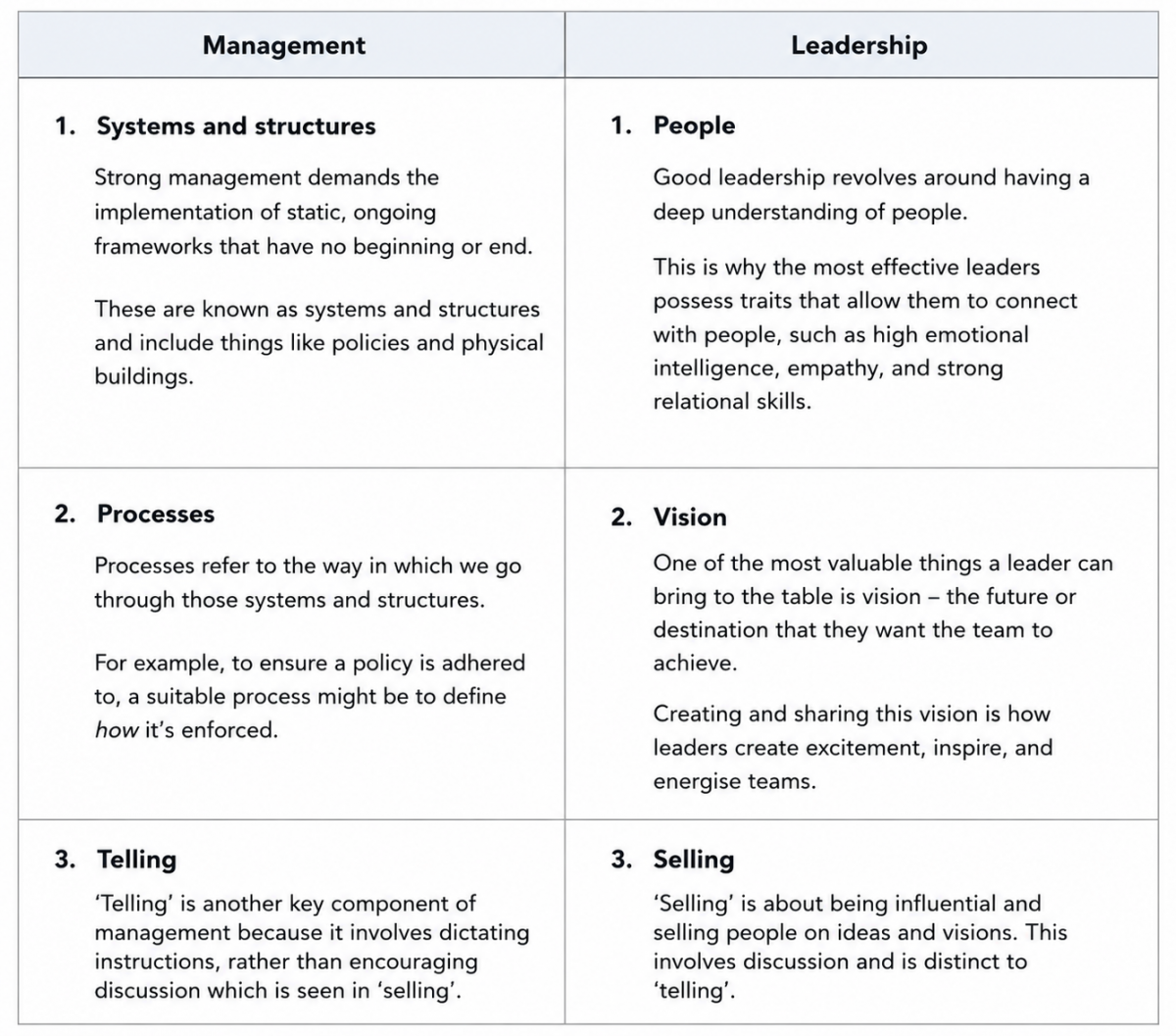
A good leader was previously thought of as someone who dictated every move and handled every process.

With AI technology now excelling in efficiency and automation, it can do all the heavy lifting when it comes to optimising workflows and carrying out execution at scale.

But there’s still room for modern leaders to flex their managerial muscles. Instead of simply managing systems, today’s leaders should turn their attention to driving team direction, meaning, and human connection.

By creating purpose, cultivating trust, and inspiring a shared vision, the most effective leaders will be those who can help people see how their work contributes to the bigger picture.

In essence, good leadership amid the rise of AI is far less about command and control, and more about coach and connect.

Leveraging the power of emotional intelligence

As AI makes light work of logic-based tasks, emotional intelligence will become the key differentiator. Because empathy, awareness, and emotional agility can’t be automated or replicated.

Even attempts at prompting AI to take an empathetic approach feel disingenuous and hollow. Let’s consider a situation where a leader must make redundancies:

An automated, AI-generated email sent to the affected individuals would certainly be efficient and clear, but would this be the most compassionate, understanding, and respectful approach? Hardly.

The best leaders? They’ll be the ones who use tech for insight, but emotional intelligence for determining impact and sensitivity.

Focusing on upskilling and human growth

Autonomous tools are taking more and more routine tasks off leaders’ plates. But by doing so, they create sought-after space.

And the way in which leaders fill this space is where they can demonstrate their true value. One such activity involves driving team development.

By encouraging learning, curiosity, and cross-functional skills, they can turn freed-up time into future value, supporting greater capability, confidence, and creativity across their team.

Multiplying creativity

With automation removing time-consuming repetition, creativity becomes an increasingly valuable currency. And if leaders want to create an environment that fosters creativity and innovation, they must champion experimentation and psychological safety.

This means rewarding curiosity, treating setbacks as feedback rather than failure, and allowing ideas the time and space they need to fully develop.

The leaders who recognise this distinct shift and are able to respond accordingly will turn automation into amplification, multiplying the uniquely human, creative potential of their people.

Offering purpose as the north star

AI will follow instructions flawlessly (or at least most of the time, with the right prompting) but it can’t choose the best direction. That’s where good leadership comes in.

Leaders act as the compass, defining the ‘why’ (the purpose, principles, and perspective) behind a certain move or decision.

By leveraging AI to augment human judgement, rather than replace it entirely, these leaders will ensure technology serves people, not the other way around.

A crucial leadership skill now will be integrating machine intelligence with human wisdom, knowing when to listen to the algorithm and when to trust intuition.

The new leadership equation: AI + HI (Human Intelligence)

Since the advent of the science-fiction genre, there’s been endless literature that fans the flames of AI versus humanity.

But the conversation about the future is far too focused on who will win the war between artificial and human intelligence – rather than who will master how to combine them.

The leaders who will thrive in this new era will be those who can balance technological capability with timeless human character.

They’ll understand how to harness the precision, speed, and scale of AI while grounding decisions in empathy, ethics, and emotional intelligence.

How to tackle burnout and disengagement as a leader

Feeling exhausted and overwhelmed with your professional position as a leader?

Between inspiring entire teams, making business-critical decisions, and setting a clear vision for the company, leadership burnout coupled with disengagement is reportedly widespread – and on the rise.

According to figures from DDI’s Global Leadership Forecast 2025, which surveyed over 10,000 leaders from different industries across the world, 71% reported significantly higher stress levels since stepping into their current roles.

Add to this the findings from Kahoot’s 2025 Workplace Engagement Report – where only 47% of leaders currently consider themselves “fully engaged” in their work, and 46% say they would give up their title if it meant regaining a sense of engagement – taking up a leadership position starts to look like a rather unattractive proposition.

These staggering – and deeply revealing – statistics highlight the importance of developing workplace resilience and implementing methods of safeguarding your professional performance.

As an influential leadership authority operating in the elite level sport, education, and business space,
Drew Povey explains his new playbook for re-energising yourself and your teams.

Why does it matter when the leaders lose their spark?

Burnout and disengagement are connected, but they are not the same.

While burnout is exhaustion, often driven by constant pressure and decision fatigue, disengagement is detachment fuelled by a loss of connection, purpose, and enthusiasm for the vision that once motivated every decision.

Of course, feeling disengaged and burnt-out at the same time can have a profound impact on your individual professional output as well as your personal life. But when leaders lose their spark, teams lose their light, too.

Instead of being confined to the performance of just one member of the team, the effects of burnout radiate across teams, and in some cases, entire businesses as they quietly drain energy, creativity, and culture from the inside out.

It’s the leadership paradox of our time: the more responsibility we carry, the less space we create for our own renewal.

The remedy? Crucially, it’s not about working harder. It’s about leading differently.

The five leadership levers to reignite engagement

Recharge yourself first

The oxygen mask principle applies – if you can’t breathe, you can’t lead.

Building rest periods, moments of reflection, and firm boundaries into your routine isn’t self-indulgence; it’s self-preservation that will ultimately support the entire team’s success.

Reconnect people with purpose

Engagement thrives when people know why they do what they do. Clarity, context, and connection are leadership fuel.

Great leaders, particularly in the age of AI and automation, don’t just tell people what to do, they offer meaning behind the tasks, reminding the whole team why their work really matters.

Reignite growth and learning

Disengagement often comes from stagnation. When work stops stretching us, it starts draining us.

By creating space for curiosity, learning, and development, both for your team and for yourself, you can promote performance-boosting growth and learning.

Lead with emotional intelligence

Empathy, active listening, and psychological safety are no longer optional soft skills that, under the right circumstances, are ‘nice to have’.

All these skills are indicative of a leader with strong emotional intelligence. And these individuals are adept at creating teams that feel seen, supported, and safe enough to bring their best to the table.

Celebrate progress, not just perfection

Recognition is the antidote to disengagement. The smallest “I saw that” or “well done” moment can reignite motivation more than any grand strategy. When people feel valued, they bring value.

Focusing on presence, not performance

Burnout and disengagement are stark reminders that leadership, at its core, is incredibly emotional, energetic, and deeply personal.

Yes, the data tells a worrying story right now, but it also reveals an opportunity: an opportunity for leadership to shift away from performance obsession and towards presence intention.

With speed, scale, and stress dominating the workplace, the most effective leaders will be those who can listen deeply, think clearly, and act intentionally amid pressure.

By adopting a more aware, empathetic, and human approach to leadership, we create space to look inward and ask:

“Am I still connected to what makes me come alive?”

Because when leaders rediscover that spark, everyone else can feel the warmth.